An epic solution to a common problem.
Adobe Illustrator, Photoshop, and InDesign
How can we encourage language learning for people of all ages? Is there a way to make it fun rather than rote?
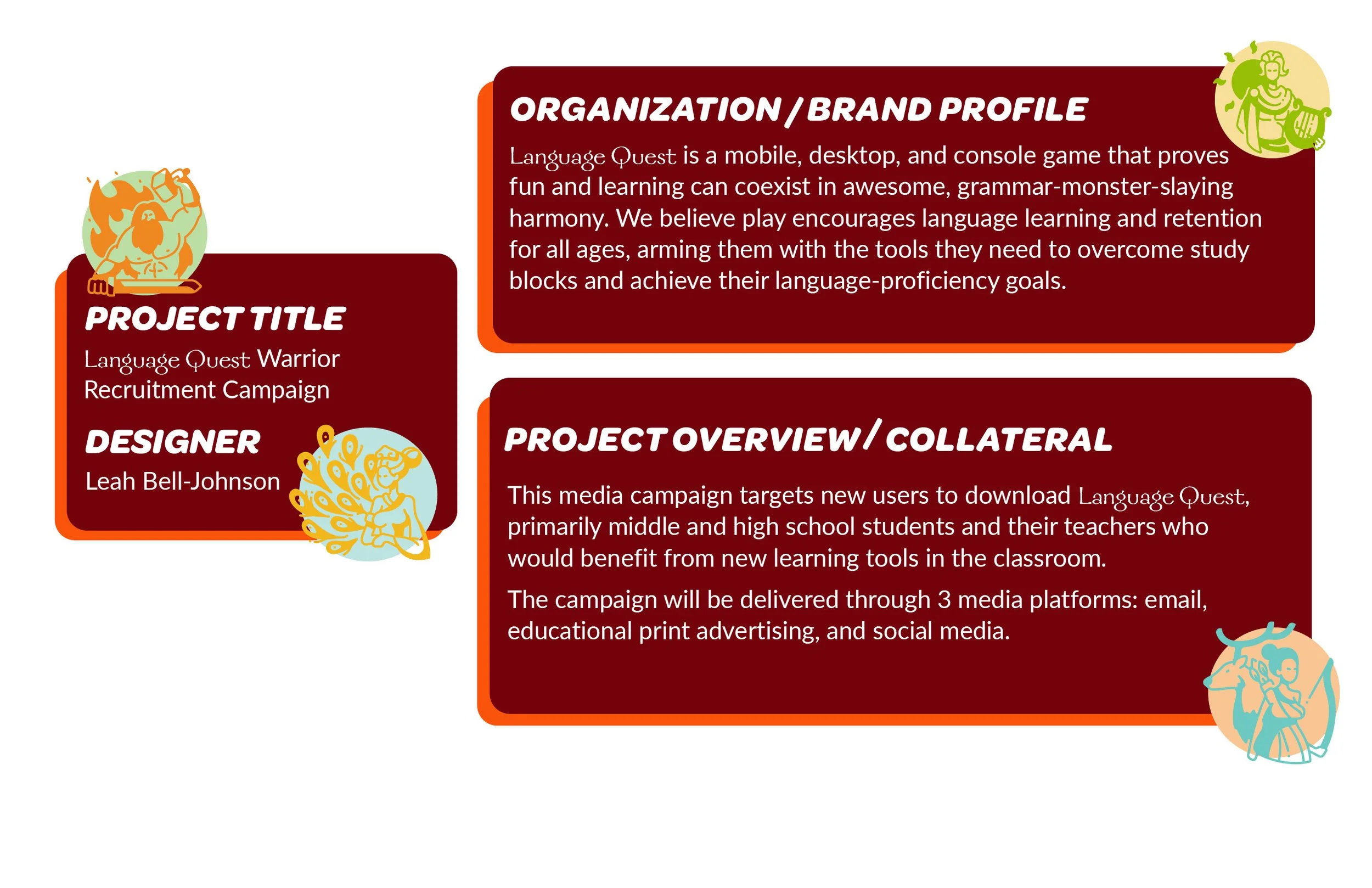
Language Quest is my conceptual response to those questions, a video game that marries educational heft and mythic themes to bring language learning to life.
Language Quest creates a space where learners of all ages can explore new worlds and vanquish even the most terrifying grammar monsters.
Imagining
-
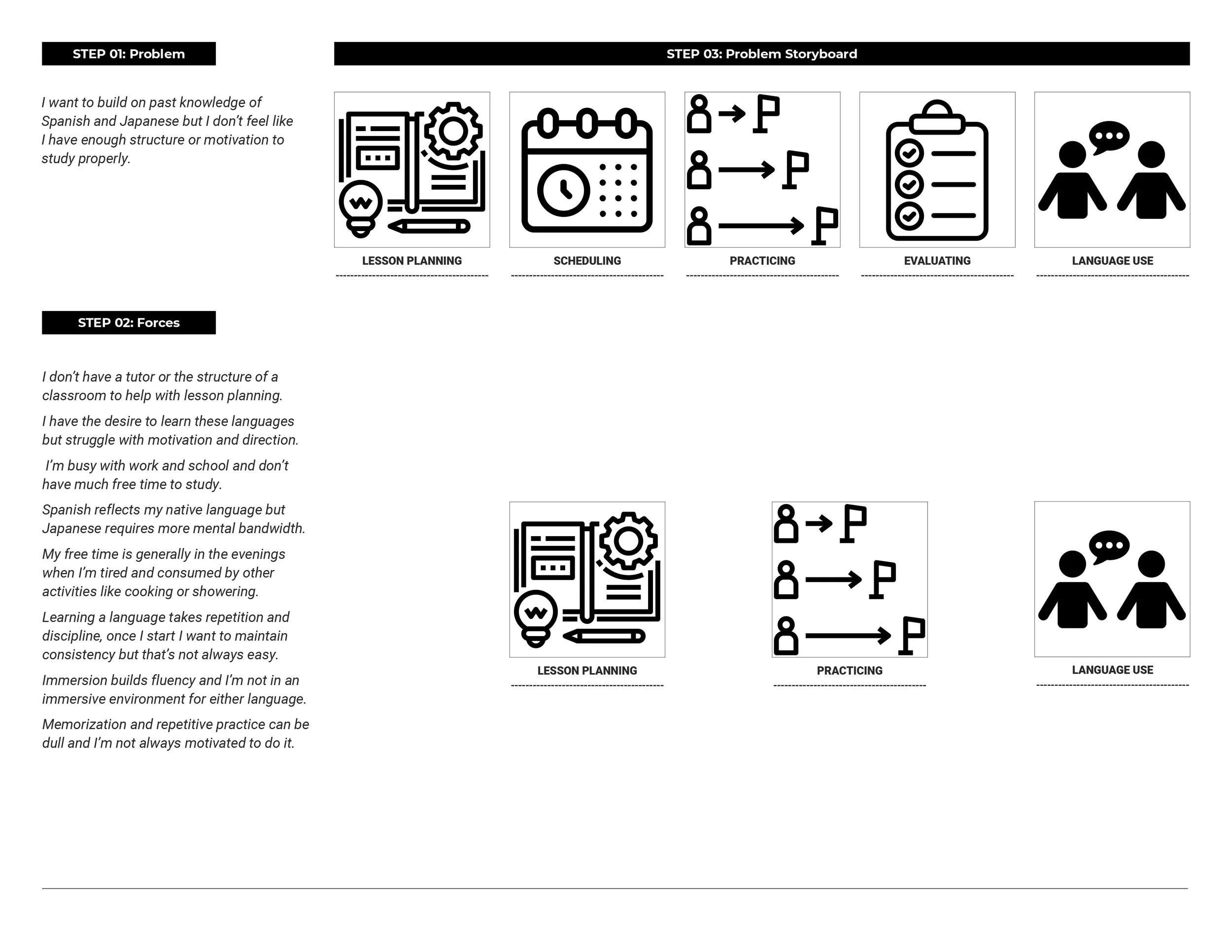
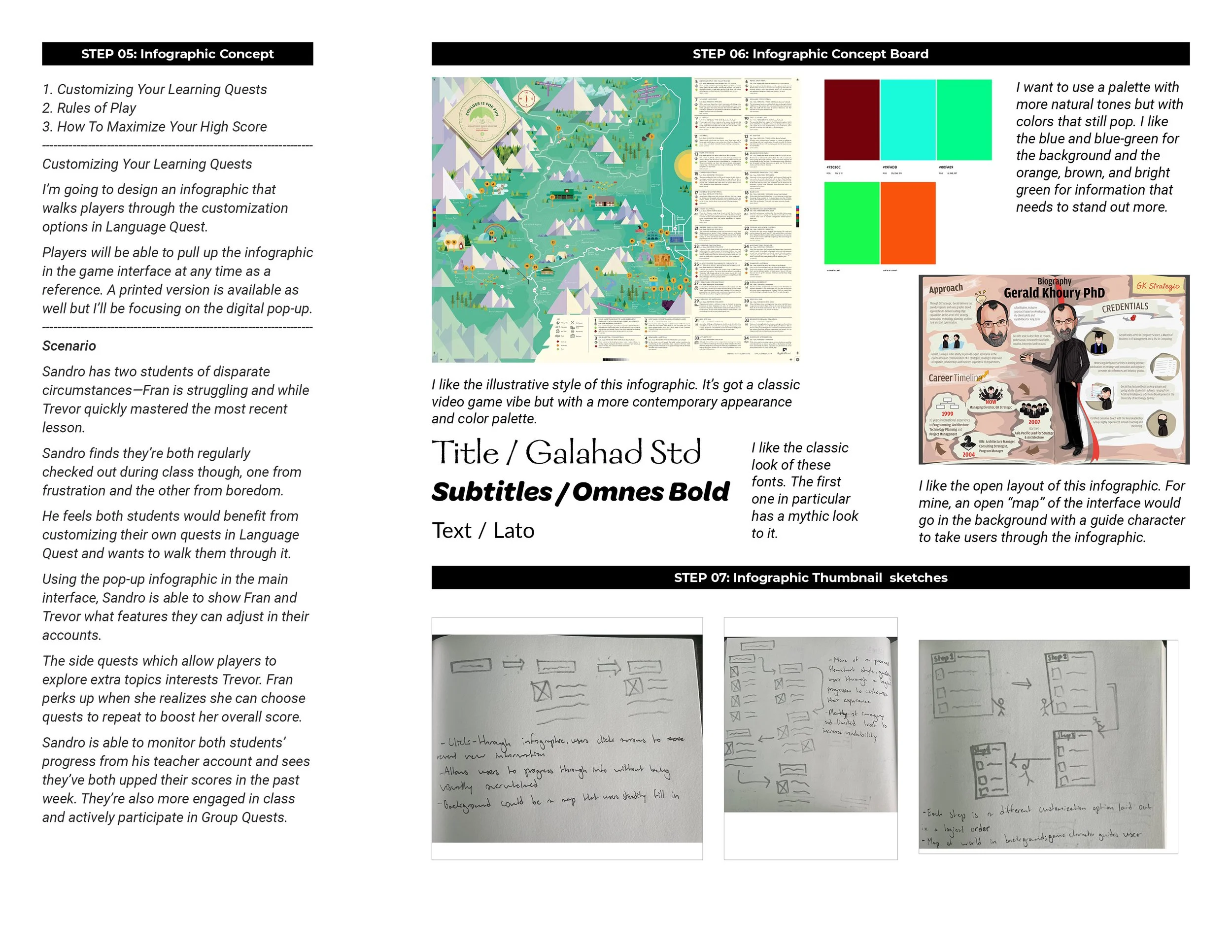
This project began with a simple consideration—what’s one thing in my life I would like to improve? The ability to practice and retain a foreign language beyond the structured environment of a classroom.
-
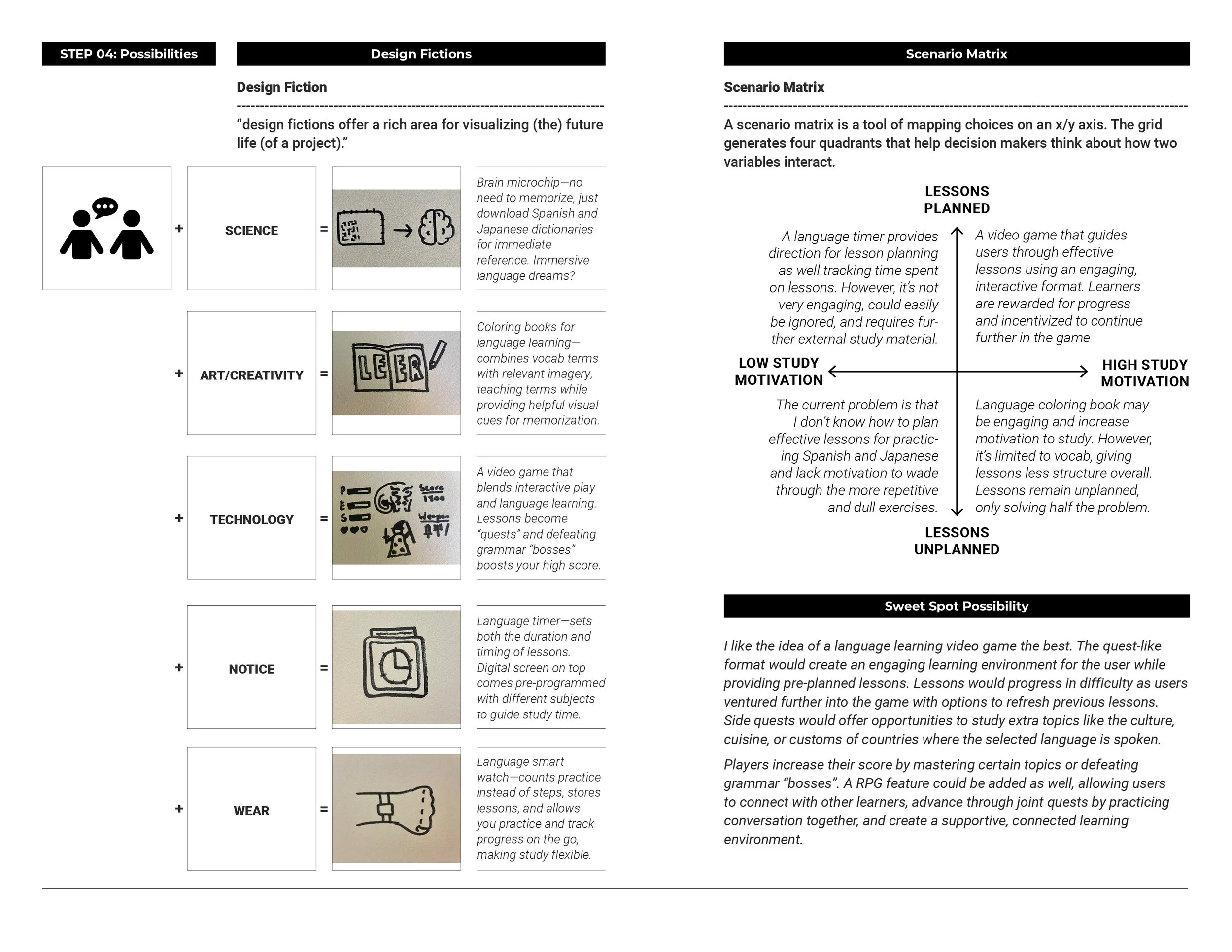
A structured ideation process allowed me to explore several solutions from the practical to the absurd. Exploring both ends of the spectrum revealed a “sweet spot” solution—something plausible yet innovative.
-
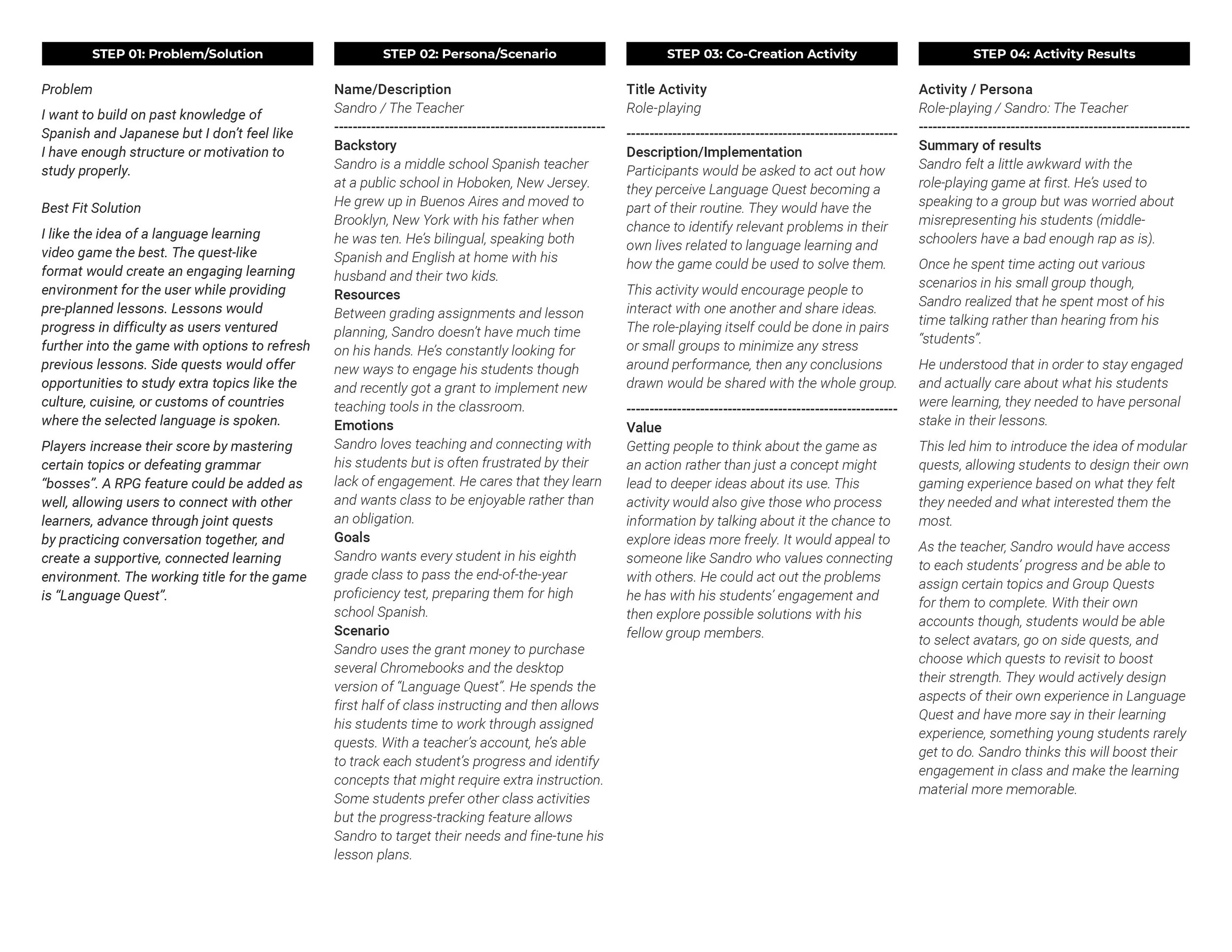
I considered the motivations, desires, and needs of different people who might benefit from Language Quest. Imagining the game in the hands of actual users informed a more believable media campaign.
Branding
-
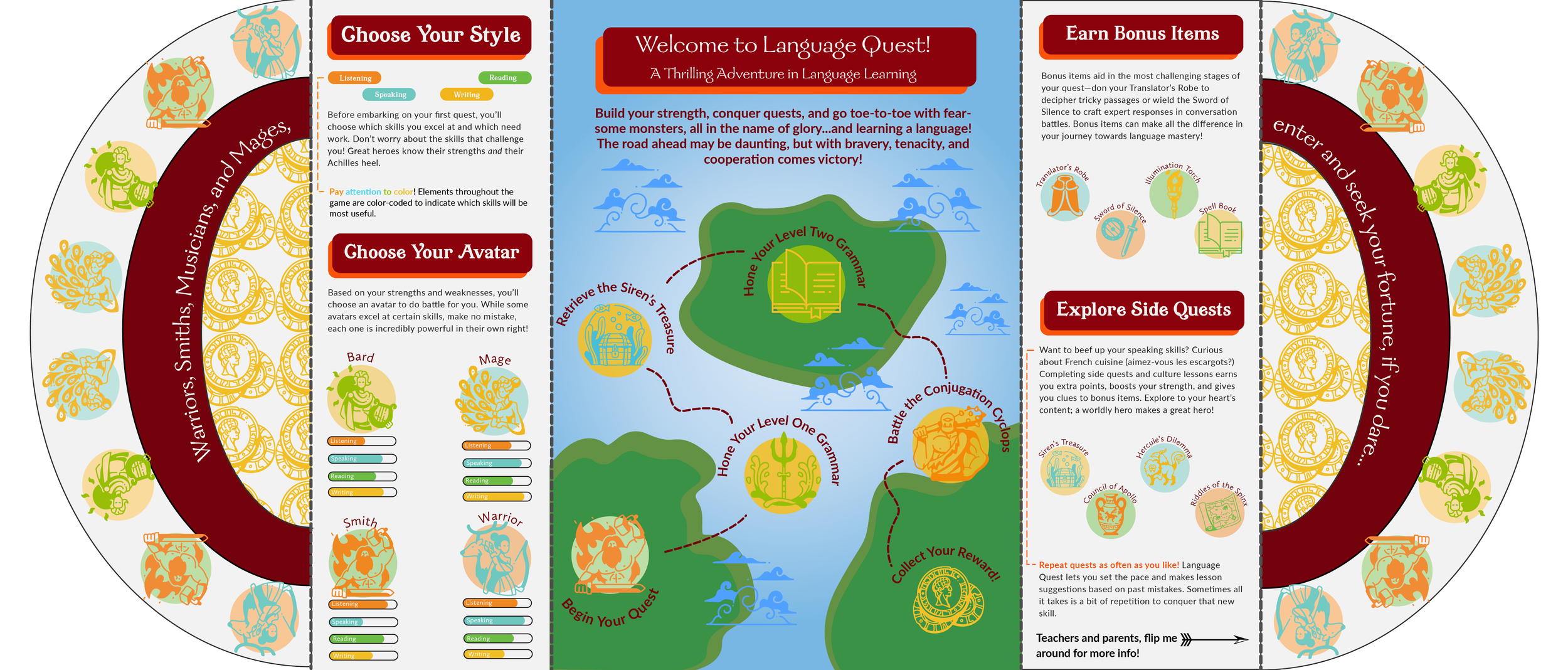
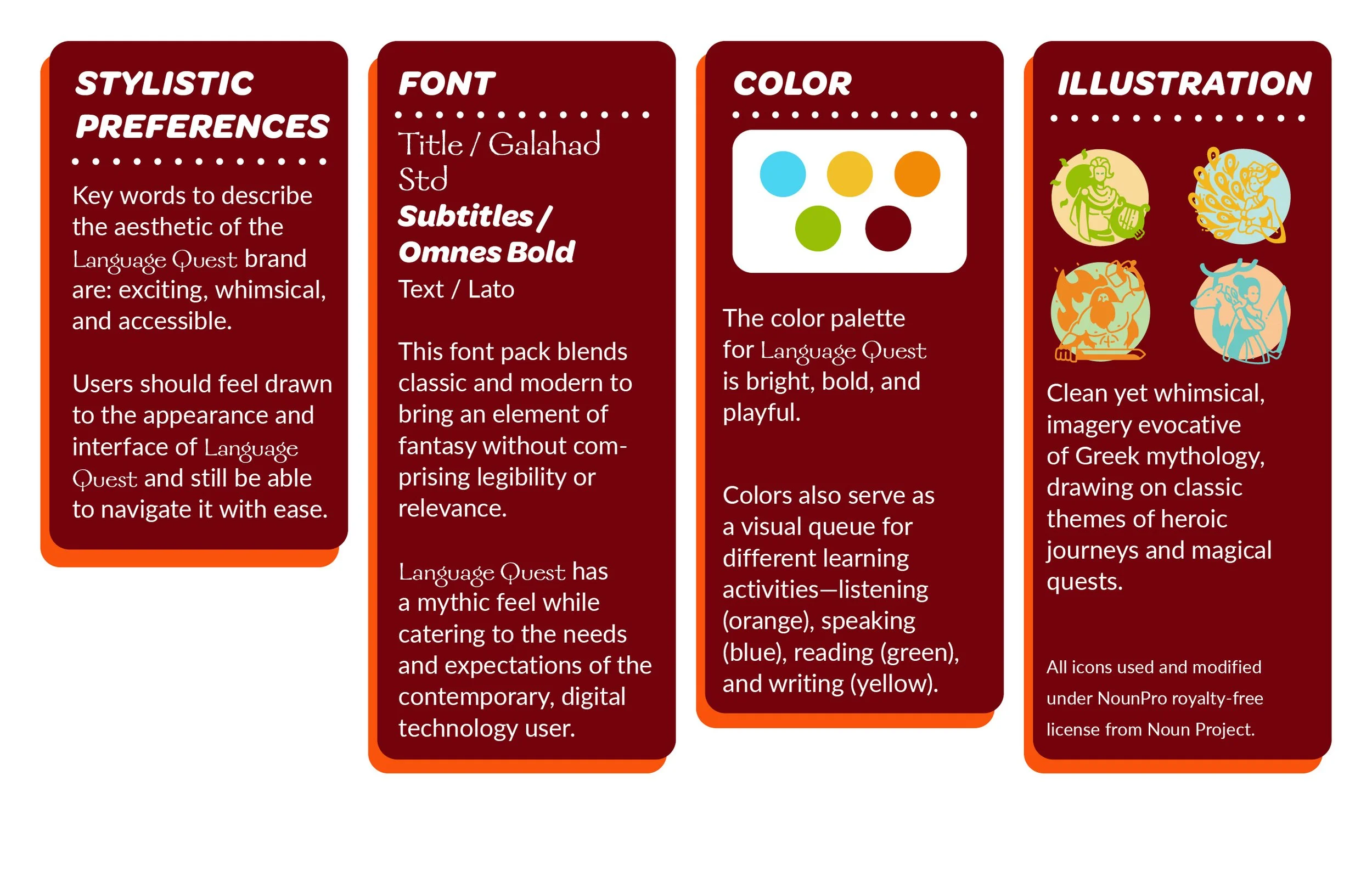
I used color for visual and organizational purposes. In addition to conveying a bold playfulness, each color represents a different subject within the game: blue for speaking-based activities, yellow for writing, orange for listening, and green for reading.
This allowed me to maintain visual continuity and convey information without relying too heavily on text.
-
The fonts blend classic and modern, creating an element of fantasy without comprising legibility. They speak to the mythic themes of Language Quest without ignoring the expectations of the contemporary digital user.
-
The graphics were adopted and adapted using a royalty-free license from Noun Project. I wanted something clean yet whimsical, drawing on classic themes of heroism and mythic quests.


Marketing
-
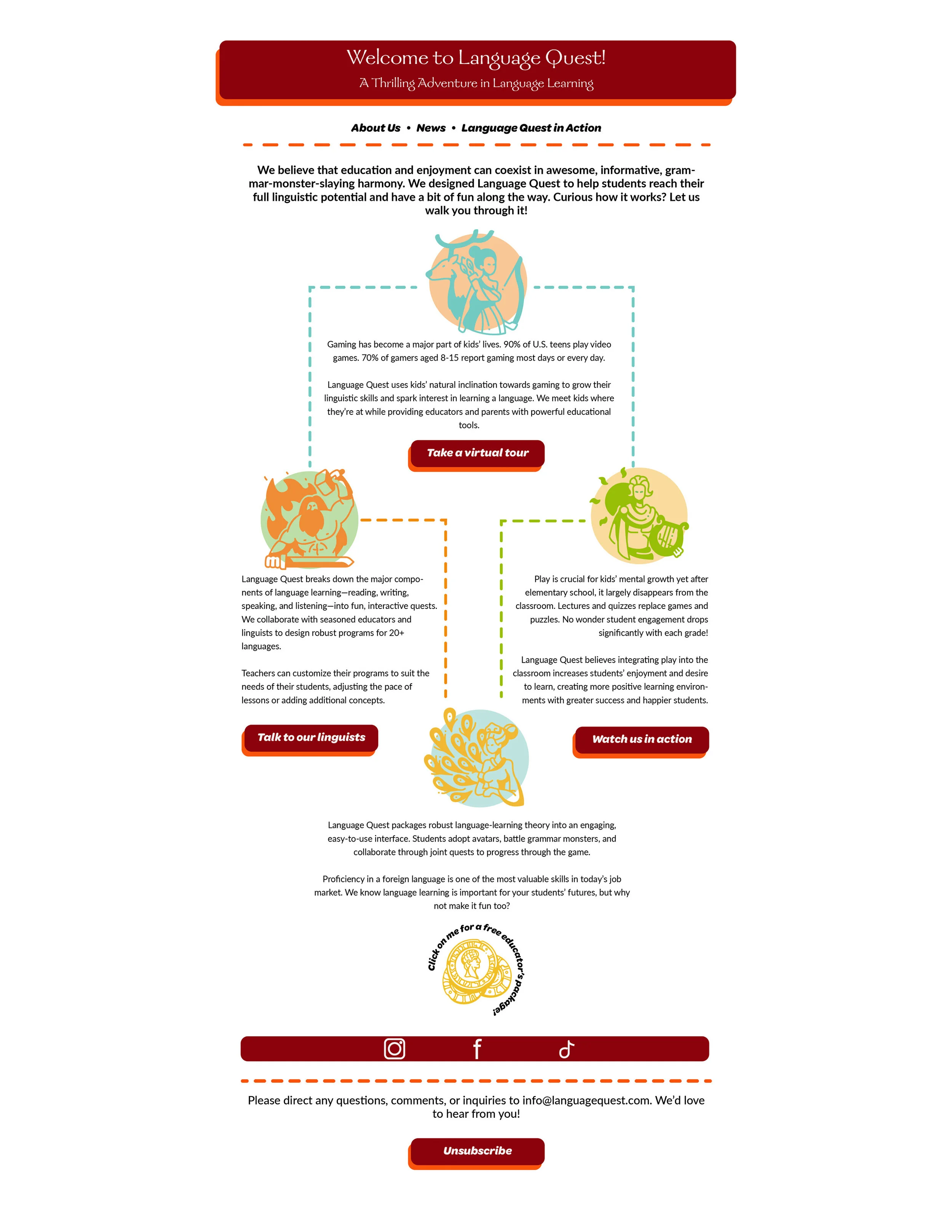
Aimed at administrators spearheading new educational tools and influencing curricula.
UX Scenario: Mayumi recently became principal at a bilingual K-12 school in Portland, Oregon. The school struggles with student performance and Mayumi is determined to make improvements in her new role.
She subscribes to several education technology newsletters. One mentions Language Quest, a new platform combining fantasy gameplay and language learning. Intrigued, she signs up for Language Quest’s email newsletter.
UX Solution: An email marketing campaign that demonstrates the educational value of Language Quest. Personable copy and playful graphics establish an immediate connection with the reader, inviting action rather than demanding it.
After reading several informative yet engaging emails, Mayumi decides Language Quest might benefit her school. A link in the email allows her to sign up for the educator’s info package: a free demo version of the game plus a box of brochures to distribute to teachers and students.
-
Aimed at teachers who serve as conduits between students and curricula.
UX Scenario: Sandro is a middle school Spanish teacher at a public school in Hoboken, New Jersey. He’s bilingual, speaking both Spanish and English at home with his family. Sandro loves teaching and connecting with his students but is often frustrated by their lack of engagement.
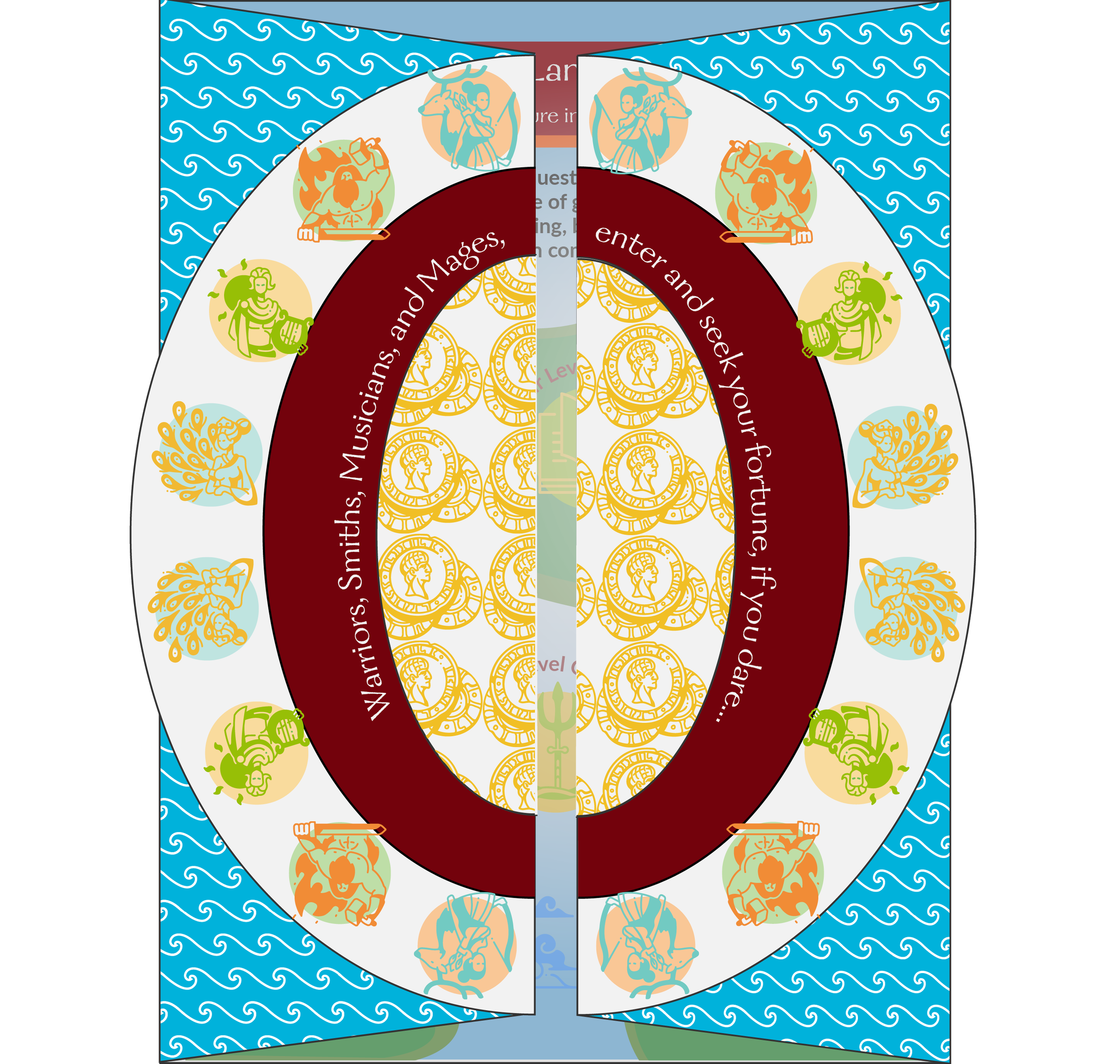
Sandro finds himself staring at a sea of blank faces as he leads his class through a review of past and present tense. That same day a box of brochures arrives for a platform called Language Quest. Sandro opens one to find a fantastical scene with curious creatures but also promising information on the benefits of gameplay for language retention.
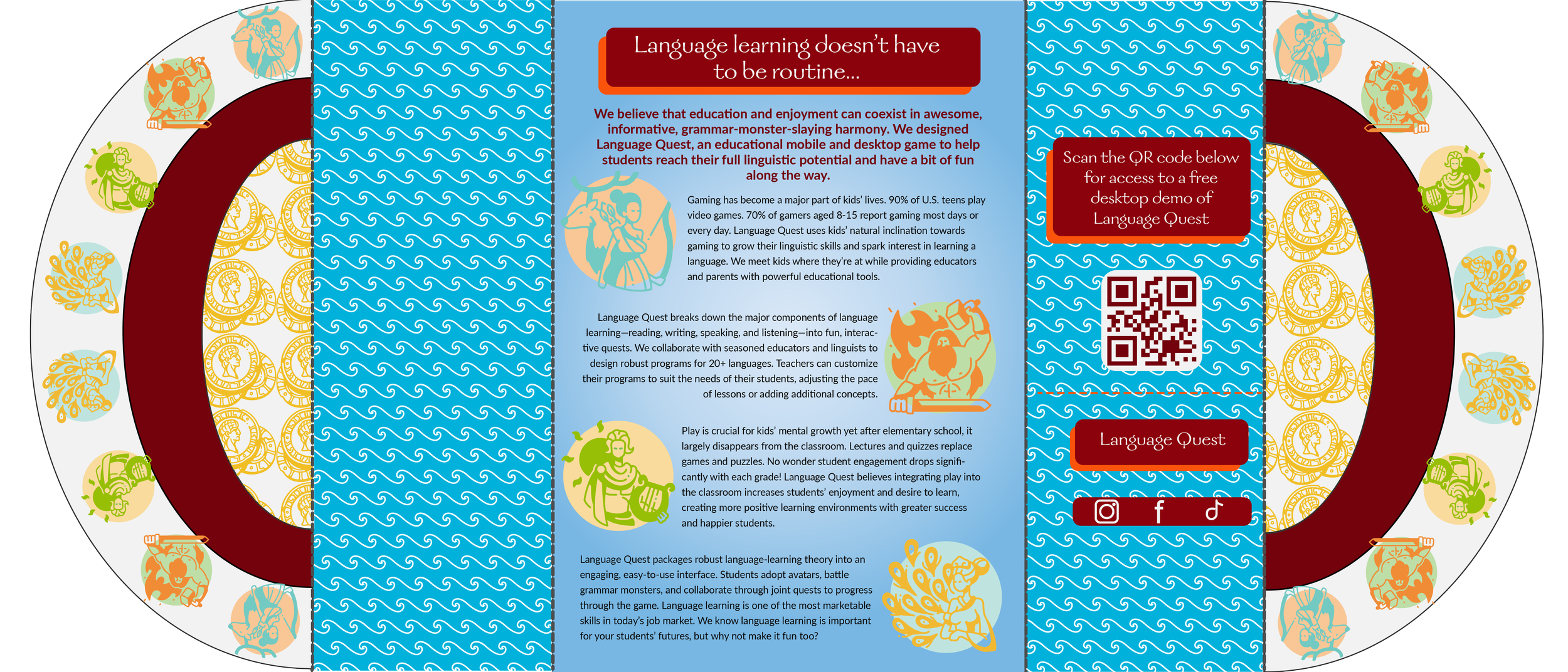
UX Solution: An interactive brochure that offers a tactile introduction to the world of Language Quest. The inside caters to students, focusing on aspects of gameplay and adventure while the back offers more factual information for teachers and parents.
Sandro decides to pass the brochures out to his students to gauge their interest. Some immediately take to the idea, and others are skeptical but will take anything that isn’t another pop quiz. Sandro decides to follow the instructions on the brochure to download Language Quest onto the class Chromebooks, using the promo code to purchase a free month-long trial subscription for his students.
-
Aimed at students who may express the least interest but stand to benefit the most.
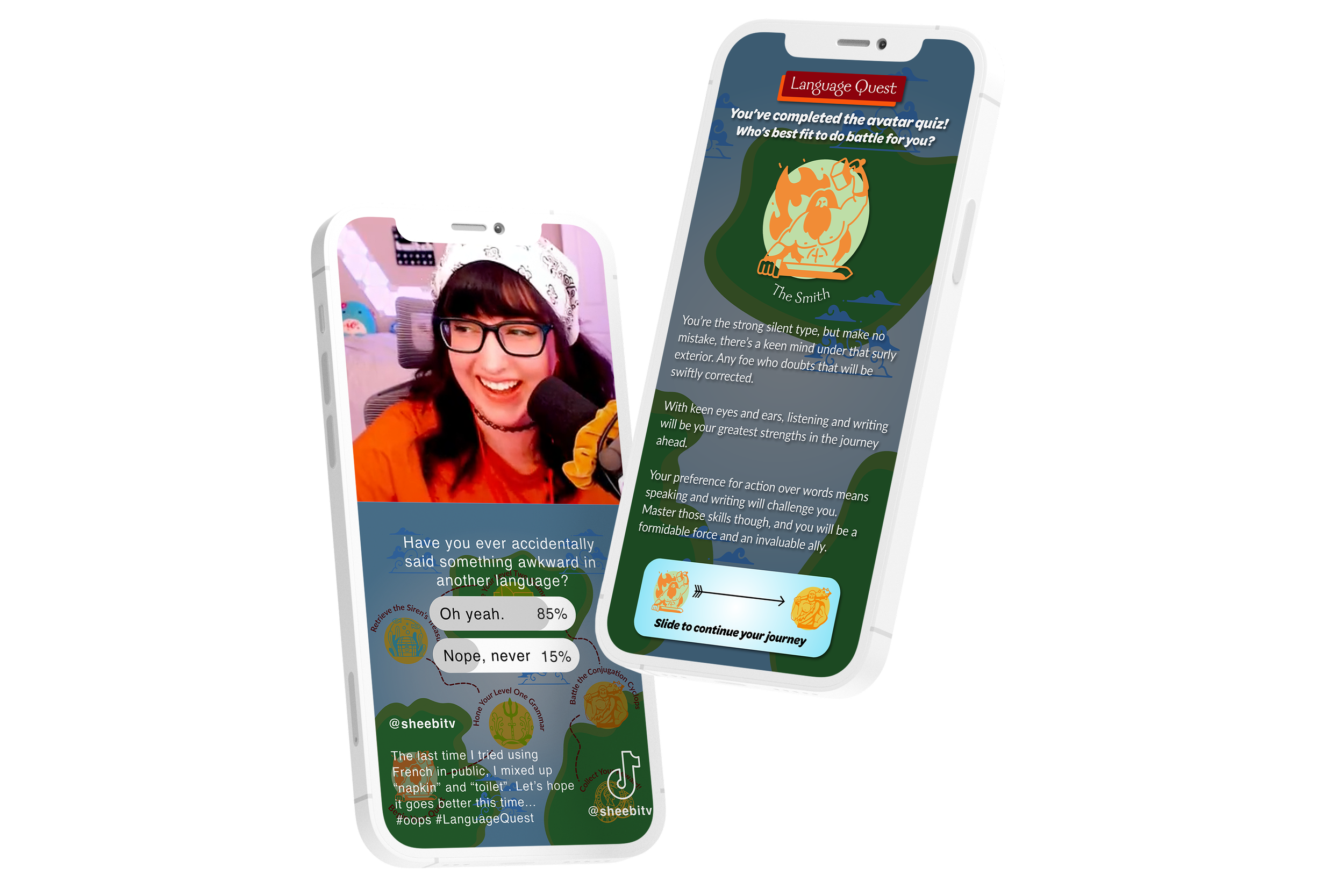
UX Scenario: Roxy is an 18-year-old high school senior living in Denver, Colorado. She is an avid gamer and recently started a YouTube channel reviewing video games. As a new influencer, she’s looking for ways to set her content apart in a competitive market.
Roxy is scrolling through TikTok when she sees a video posted by Shelby Renae, one of her favorite gaming influencers. In the video, Shelby reviews Language Quest, a language-learning video game. Roxy has heard of platforms like Duolingo but never took much interest in them.
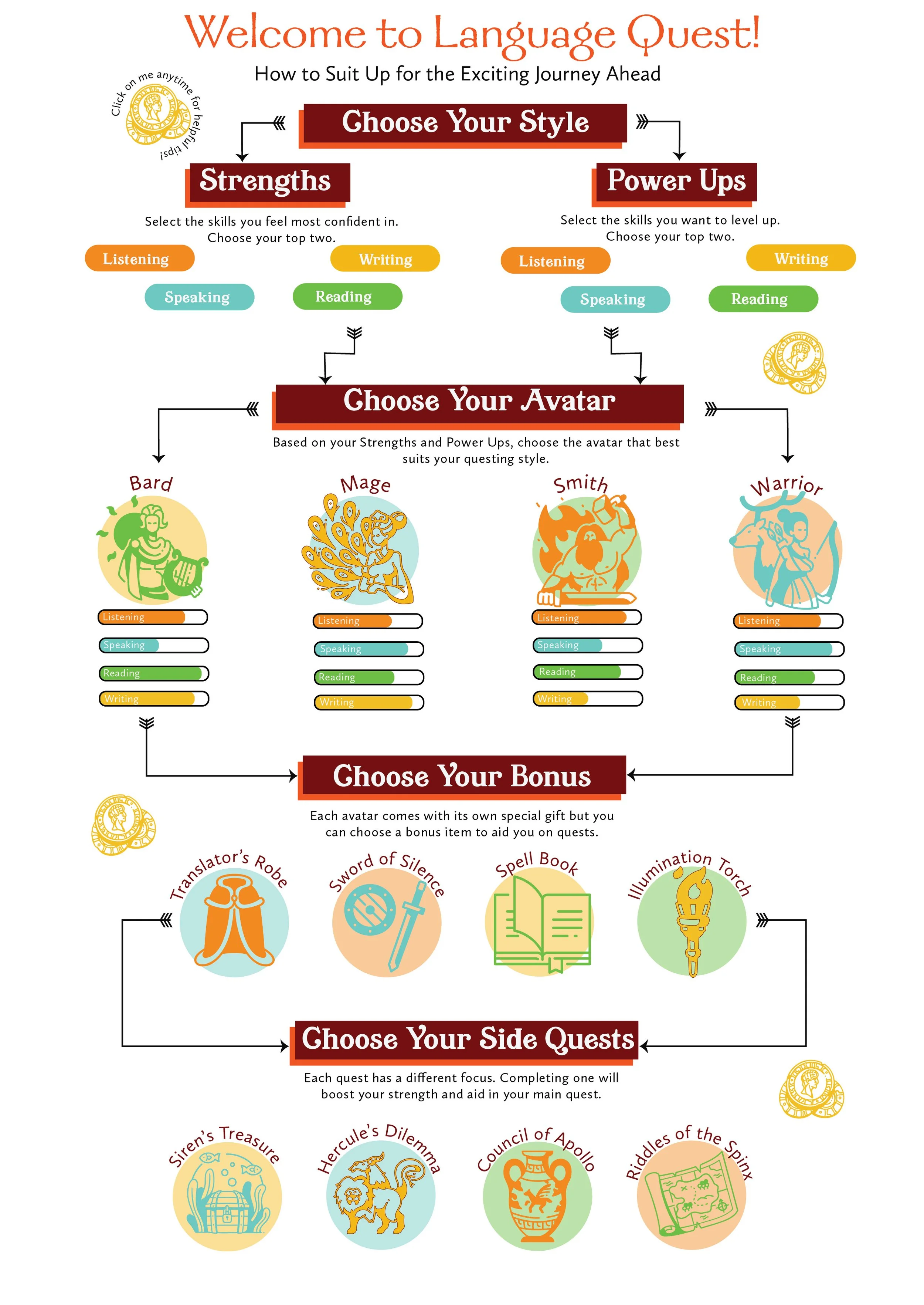
UX Solution: A social media campaign that meets a younger audience where they’re at—on TikTok interacting with influencers and personalized content. The campaign includes collaborating with popular gaming influencers like Renae and a quiz where users are matched with an avatar before exploring a mini demo of Language Quest.
After seeing the fantasy RPG format of the game and the interest Shelby’s video has generated, Roxy decides it might be worth trying. She reaches out to Language Quest, who offer a free month-long subscription in exchange for a review on Roxy’s channel.